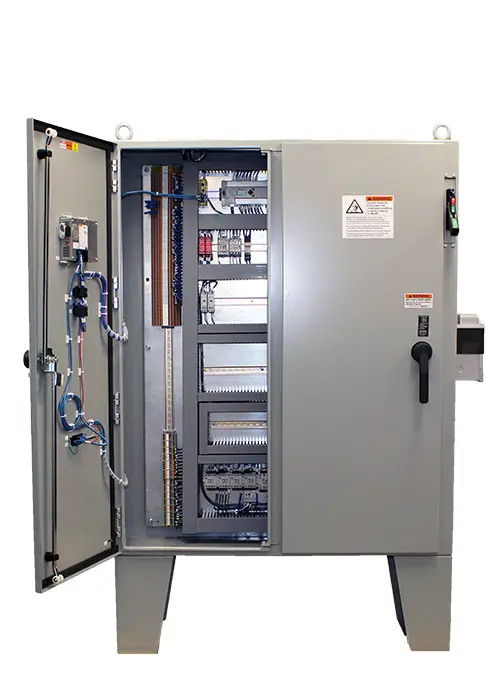
Automation Panel
Automation Panel
PLC Panel
A PLC panel, or Programmable Logic Controller panel, is an industrial control panel that houses a PLC (a specialized computer for automation) and other essential electrical components used to control and monitor industrial processes. It acts as the “brain” of an automated system, receiving inputs from sensors, processing data based on programmed instructions, and controlling output devices like motors or relays.
Features:
- Automation and Control
- Monitoring and Data Acquisition
- Remote Access and Control
- Alarm and Fault Management
- Customization and Flexibility
- Enhanced Efficiency and Productivity
- Data Logging and Analytics
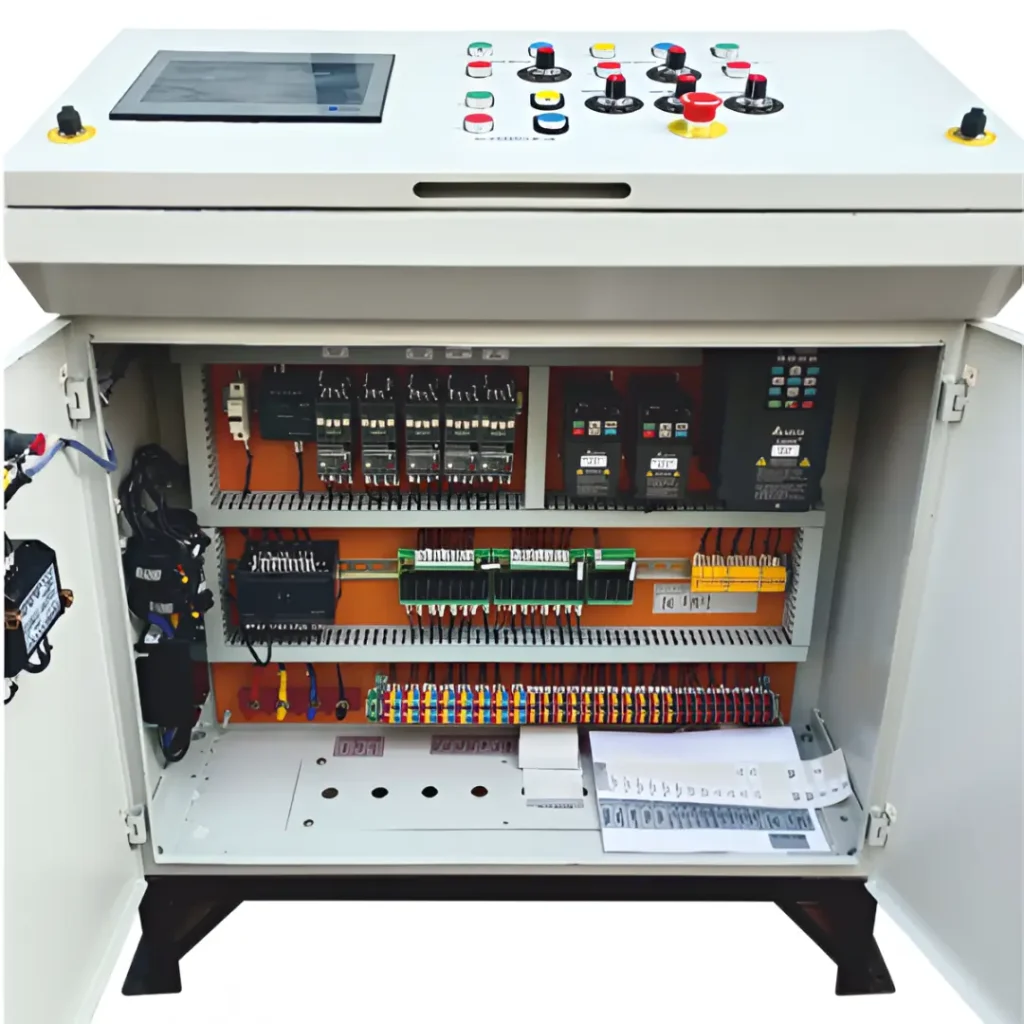
RTU Panel
An RTU (Remote Terminal Unit) panel refers to a control panel where RTU devices are mounted, typically used in industrial automation to monitor and control field devices in remote locations. These panels collect and transmit data from connected field devices and are essential components in systems like SCADA (Supervisory Control and Data Acquisition).
Features:
- Mounting: RTU panels are designed for easy mounting of RTU devices and their interface boards.
- Wiring: They provide a structured way to manage the wiring and connections for various sensors, actuators, and communication interfaces.
- Environmental Protection: RTU panels can offer protection against dust, moisture, and other environmental factors that could affect the RTU devices.
- Accessibility: They are designed to allow for easy access to the RTU devices for maintenance and troubleshooting.
- Integration: RTU panels can be integrated with other control and automation systems, such as SCADA or DCS (Distributed Control System).
- Expansion: They may include space and mounting provisions for future expansion of the RTU system.
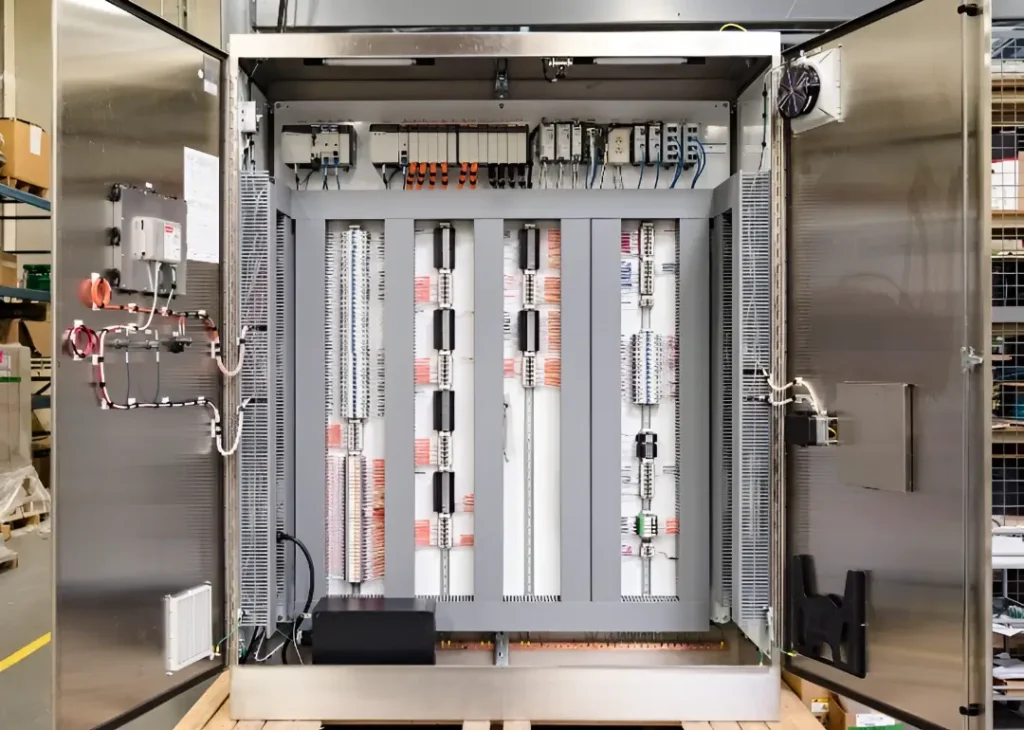
RIO Panel
A Remote Input/Output (RIO) panel, in industrial automation, is a system that allows for the decentralized connection of sensors and actuators to a central controller, like a PLC. It effectively extends the reach of the central controller by placing I/O modules closer to field devices, minimizing long cable runs and improving signal transmission.
Features:
- Decentralized Device Management: RIO panels allow for the connection and control of devices located at various points within a system or network.
- Centralized Control: They facilitate the transfer of data from these remote devices to a central controller, such as a PLC.
- Signal Conditioning: RIO panels can perform functions like signal amplification and isolation, ensuring proper communication between devices and the central controller.
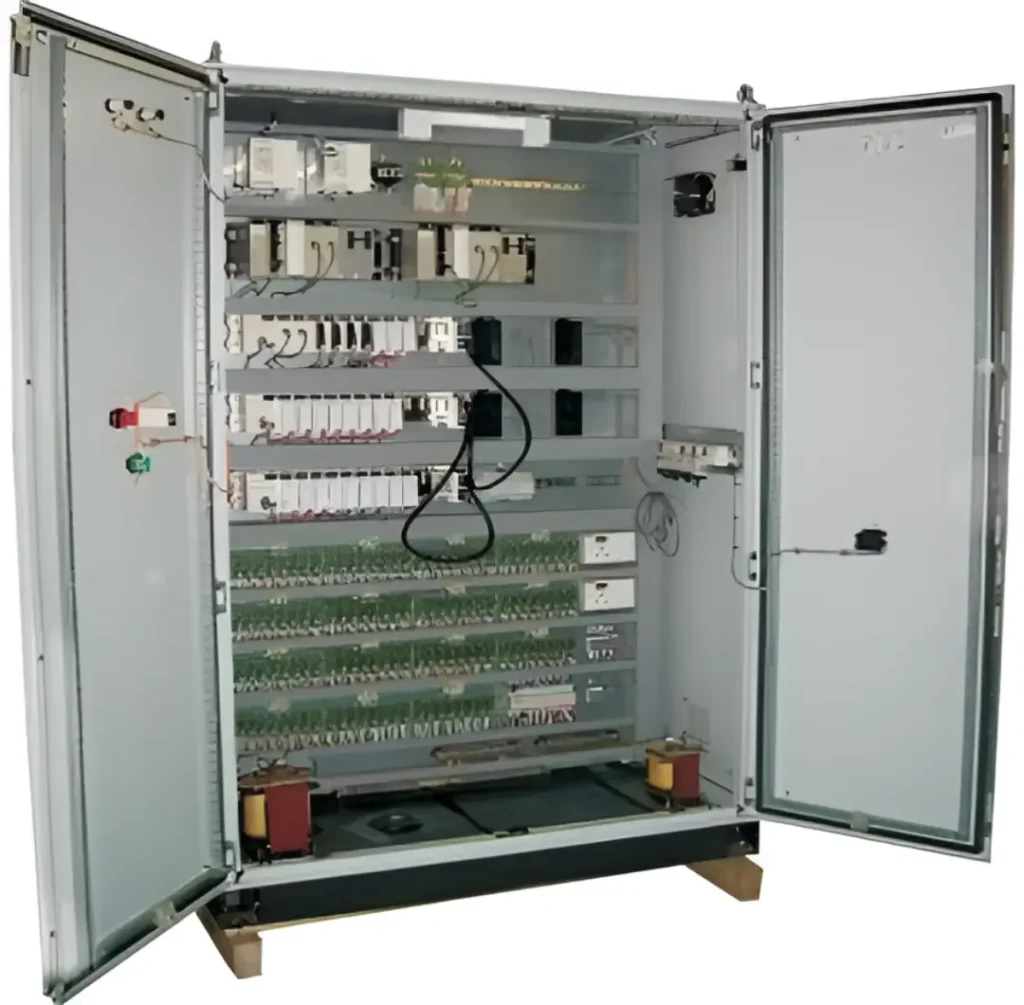
Automation Panel
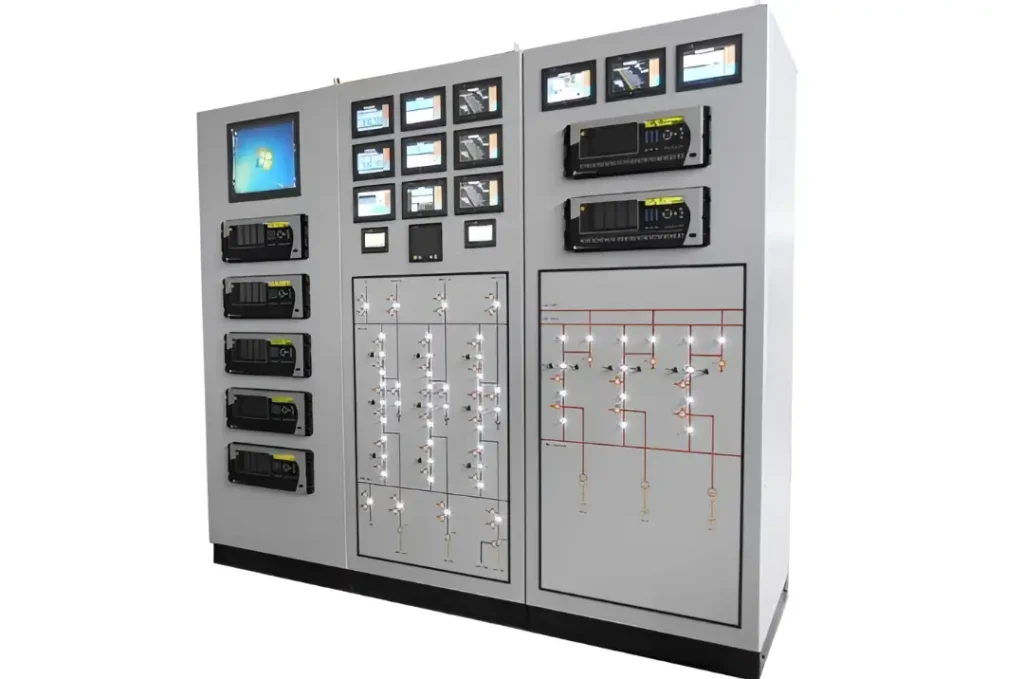
A SCADA (Supervisory Control and Data Acquisition) panel typically features real-time monitoring and control of various industrial processes, remote access and control capabilities, and data logging and reporting features. Specifications include the number and type of I/O (inputs/outputs), communication protocols supported, and the size and type of display.
Features:
- Real-time Monitoring
- Remote Access and Control
- Data Acquisition and Logging
- Alarm Management
- Human-Machine Interface (HMI)
- Scalability and Modularity
- Security Features
- Integration with Other Systems
IoT Panel
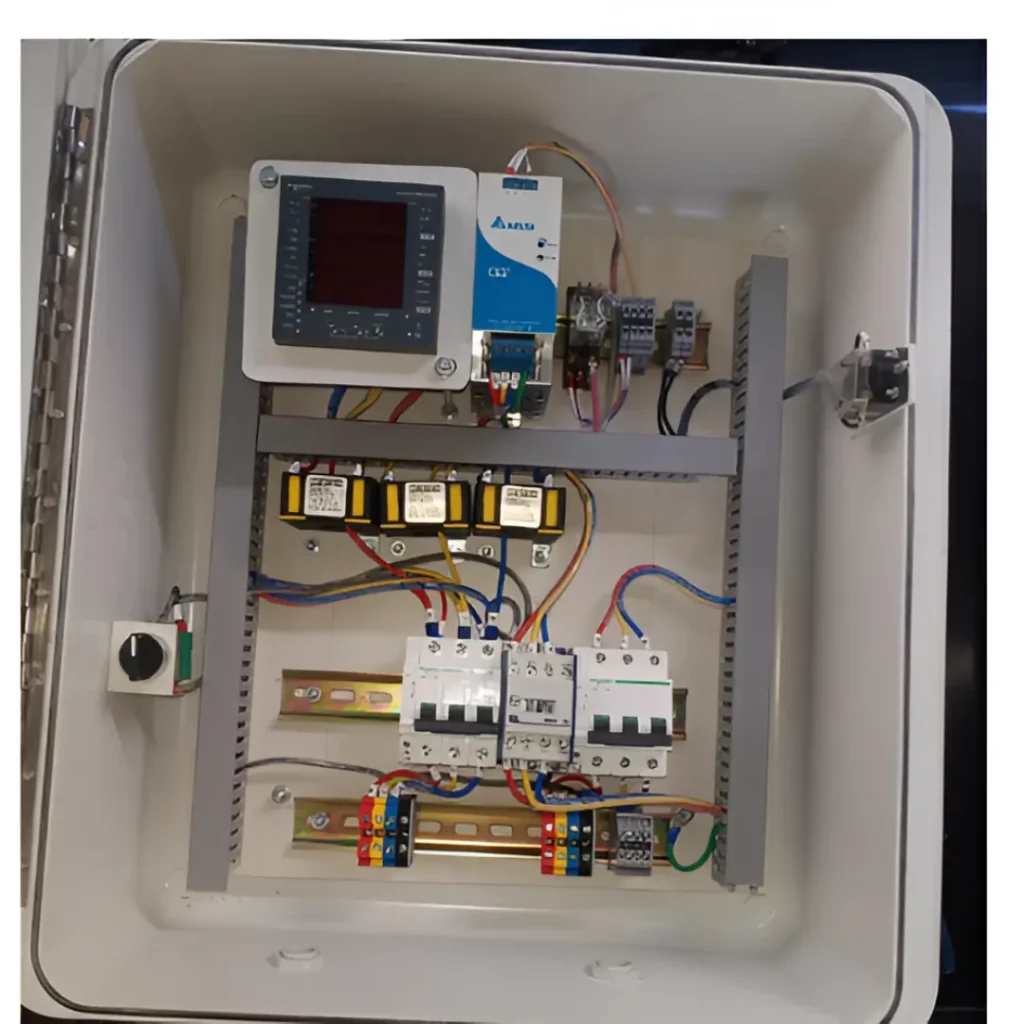
An IoT control panel, also known as an IoT dashboard, offers features like device management, real-time data monitoring, remote control, automation, and alerts/notifications, enabling users to manage and interact with their IoT devices effectively. These features allow for centralized management, improved efficiency, enhanced decision-making, and scalability.
Features:
- IoT Device Management
- Real-time Monitoring
- Remote Access and Control
- Automation and Scheduling
- Alerts and Notifications
- Data Visualization
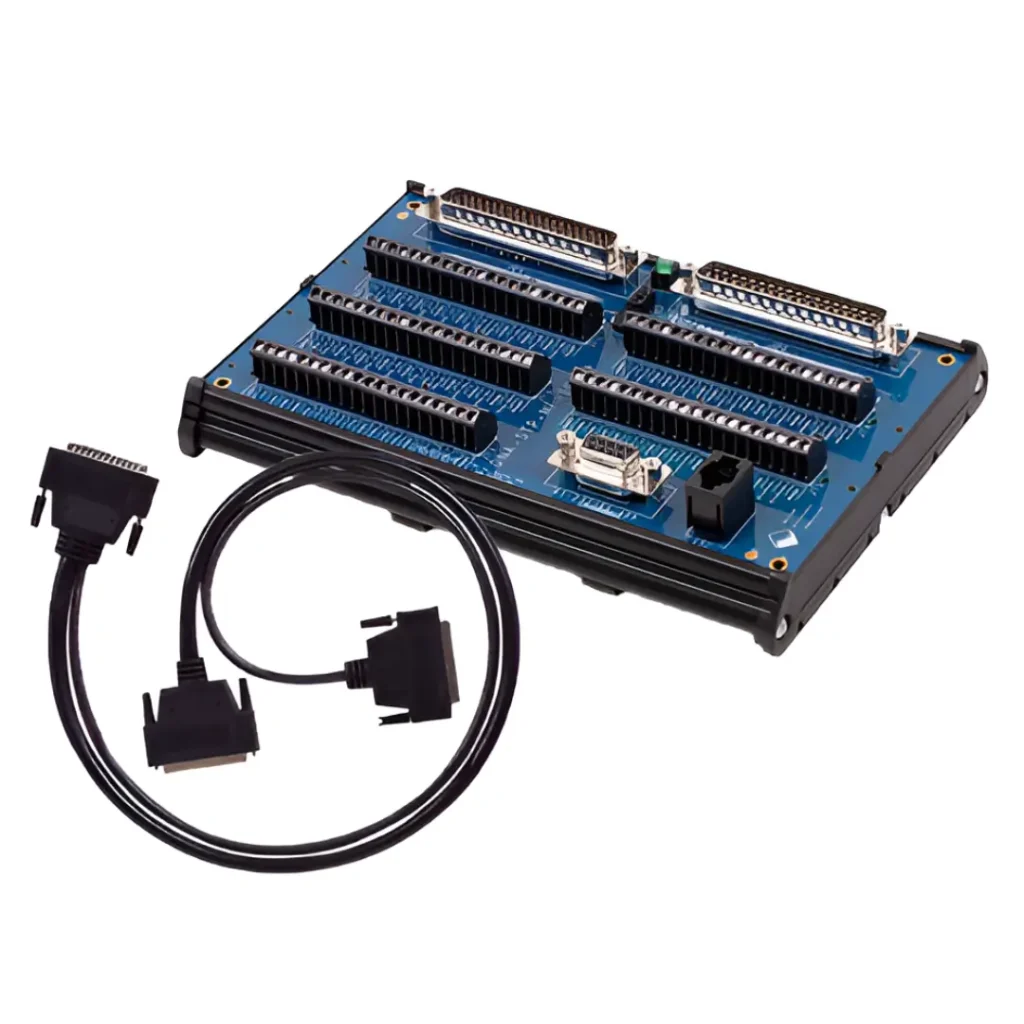
An I/O (Input/Output) panel provides a variety of ports and connectors on the back of a computer case, allowing users to connect peripherals and external devices. Common features include USB ports, audio jacks, Ethernet ports, and video output connectors like HDMI or DisplayPort. The specific ports available can vary depending on the motherboard and computer setup.
Features:
- USB Ports: Allow connection of a wide range of devices like keyboards, mice, printers, and storage devices.
- Audio Jacks: Enable connecting headphones, microphones, and speakers.
- Ethernet Port: Provides a wired network connection.
- Video Output Connectors: (HDMI, DisplayPort, etc.) for connecting monitors and displays.
- Specialized Ports: Some motherboards may include other ports for specific functions like eSATA, Thunderbolt, or legacy ports for older devices.
Control Panel
A Control Panel provides a centralized interface for managing and configuring various settings on a computer or server. It allows users to customize their experience, manage hardware and software, and control network and security settings. Features include system and security management, network configuration, user account management, software installation and removal, accessibility options, and backup and restore functions.